Mid-Century Modern Design: History, Features, Furniture & How to Decorate
Mid-century modern grew out of the modernist movement and the optimism of the post-war years. New manufacturing techniques, such as moulded plywood, fibreglass and bent steel, allowed designers in the United States, Scandinavia and Italy to create furniture that was functional, comfortable and affordable to produce. The term itself was popularised much later, in the 1980s and 1990s, as interest in the period revived. Since the early 2000s it has become one of the most popular furniture styles in the world, and Vancouver has its own strong mid-century heritage in the West Coast Modern houses of the North Shore and West Vancouver.
Key features
- Clean lines and simple forms: little ornament; the shape is the decoration.
- Organic curves: boomerang, kidney and oval shapes alongside crisp geometry.
- Tapered or splayed legs: furniture raised off the floor for a light, airy look.
- Warm woods: teak and walnut, often as veneer.
- New materials: moulded plywood, fibreglass, plastic, steel and aluminium.
- Function first: modular storage, multi-use pieces and practical layouts.
- Indoor-outdoor connection: large windows and open plans.
Mid-century modern furniture
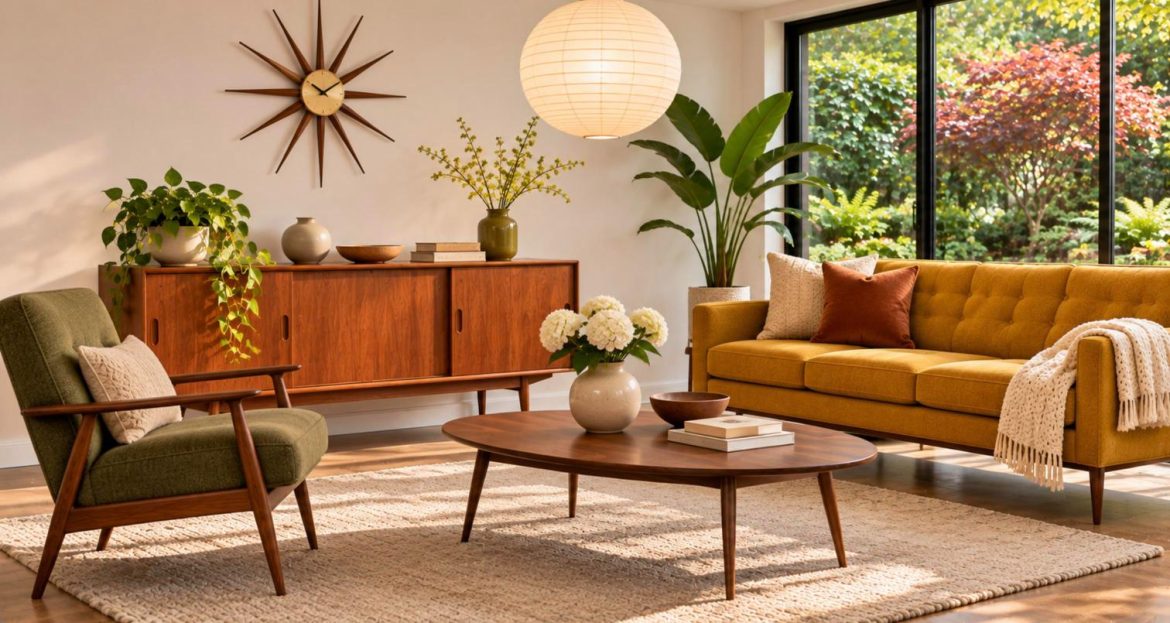
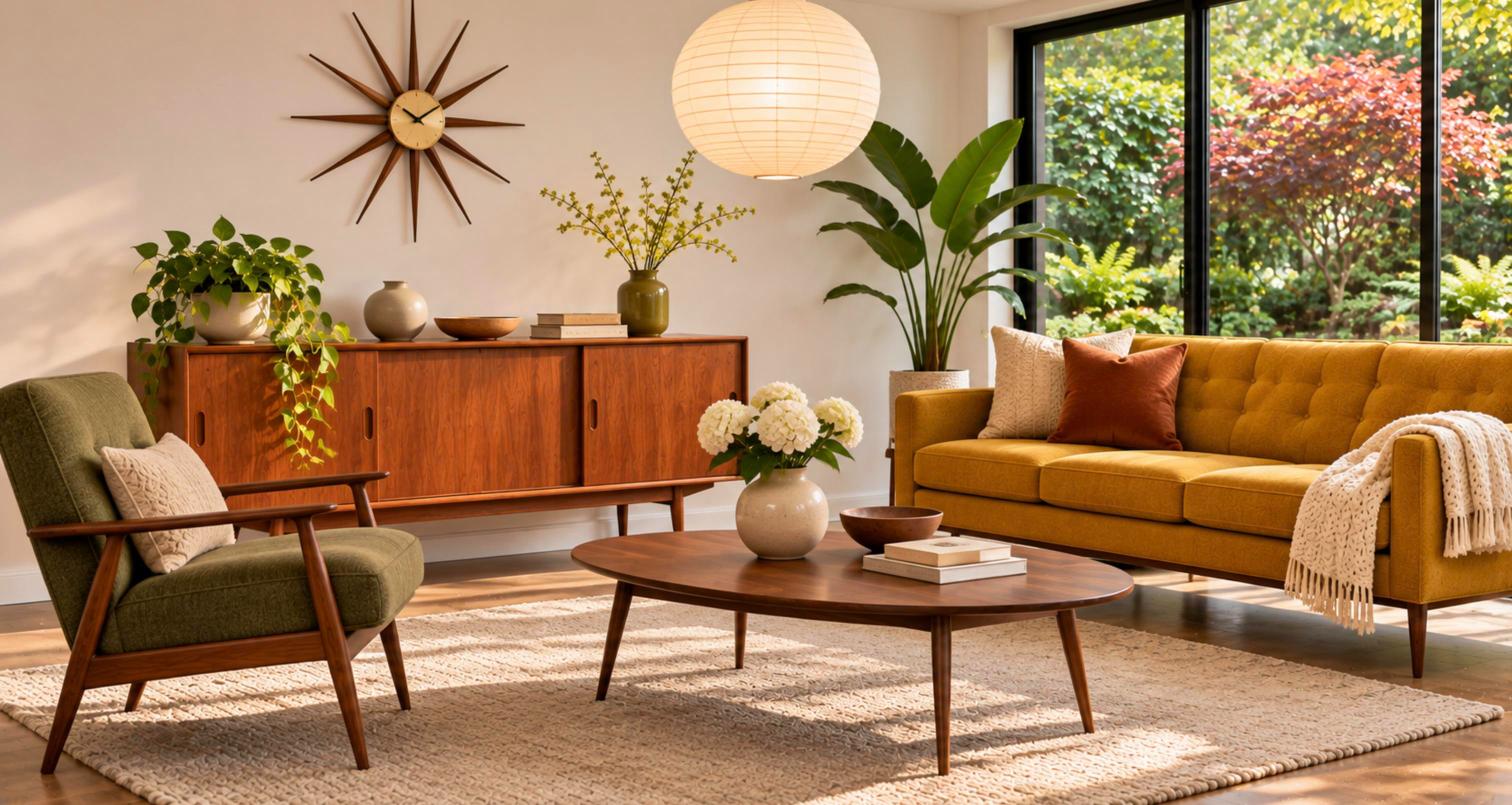
- Sideboards and credenzas: long, low, with sliding doors and tapered legs.
- Lounge chairs: wooden-framed armchairs with upholstered cushions, as in the photo, and moulded shell chairs.
- Sofas: low, tight-backed, with button tufting and slim legs.
- Coffee tables: oval, kidney or surfboard shapes in walnut or teak.
- Dining sets: round or oval tables with sculpted chairs.
- Lighting: globe pendants, arc floor lamps and sputnik chandeliers.
Colours and patterns
Mid-century palettes combine warm wood tones with confident colour: mustard, olive, burnt orange, teal and turquoise, balanced by white, grey and black. Geometric patterns, starbursts and abstract art are common accents.
Mid-century modern vs. Scandinavian design
The two overlap heavily. Much classic mid-century furniture was designed in Denmark, Sweden and Finland, so Scandinavian design is often considered a branch of the mid-century movement. American mid-century design tends to be bolder in colour and experimental in materials, while Scandinavian mid-century emphasises craftsmanship and natural wood.
Buying mid-century furniture
- Vintage originals: check for maker’s marks, solid construction and veneer condition; refinishing can restore teak and walnut.
- Licensed reissues: authorised reproductions of famous designs, made to original specifications.
- Mid-century-inspired: new furniture in the style, widely available and affordable.
- Watch for copies: unlicensed replicas of iconic designs vary widely in quality.
Mid-century modern in Vancouver
Metro Vancouver has a rich West Coast Modern architectural tradition, with post-and-beam houses designed to frame forest and ocean views. That legacy, and a strong vintage market, means mid-century furniture is especially popular here. Teak and walnut pieces suit both heritage homes and new condos, and pair well with plants and big windows.
Related terms
Frequently asked questions
What is mid-century modern design?
A design style from about 1945 to the early 1970s, known for clean lines, organic curves, tapered legs and warm woods.
What years are mid-century modern?
Roughly the mid-1940s to the early 1970s.
What wood is used in mid-century furniture?
Mostly teak and walnut, plus rosewood and oak, often as veneer over plywood.
Is mid-century modern still in style?
Yes. It has been one of the most popular furniture styles for over two decades.
How do I identify vintage mid-century furniture?
Look for maker’s labels or stamps, quality joinery, solid-wood edges and age-appropriate wear.
Part of the Vancouver Furniture glossary of furniture, design and mattress terms. Browse furniture stores across Metro Vancouver or our mattress store guide.