Nesting Tables: Definition, History, Sizes & Ways to Use Them
Nesting tables date to the late 18th century in England, where sets of four graduated tables were known as “quartetto tables”, attributed to the influence of furniture designer Thomas Sheraton. They were light enough for servants or guests to move around a drawing room for tea, cards or needlework. The idea has endured because it is so practical: one compact piece of furniture that becomes three or four when company arrives.
In compact Metro Vancouver condos, nesting tables are one of the most efficient ways to provide coffee-table and side-table surfaces without crowding the floor.
How nesting tables work
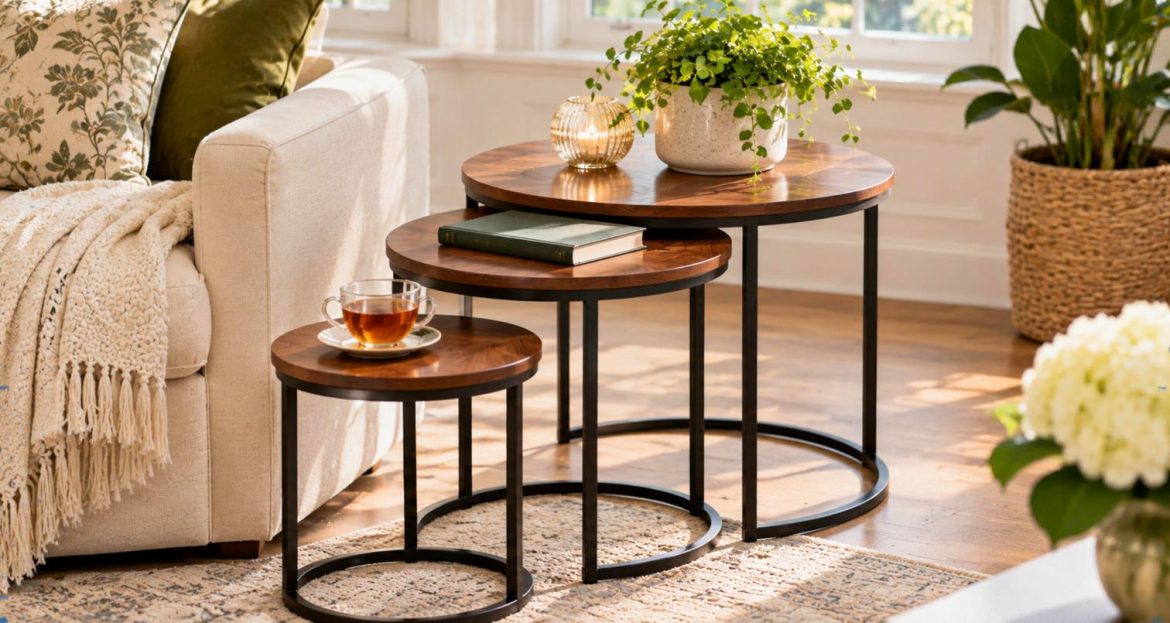
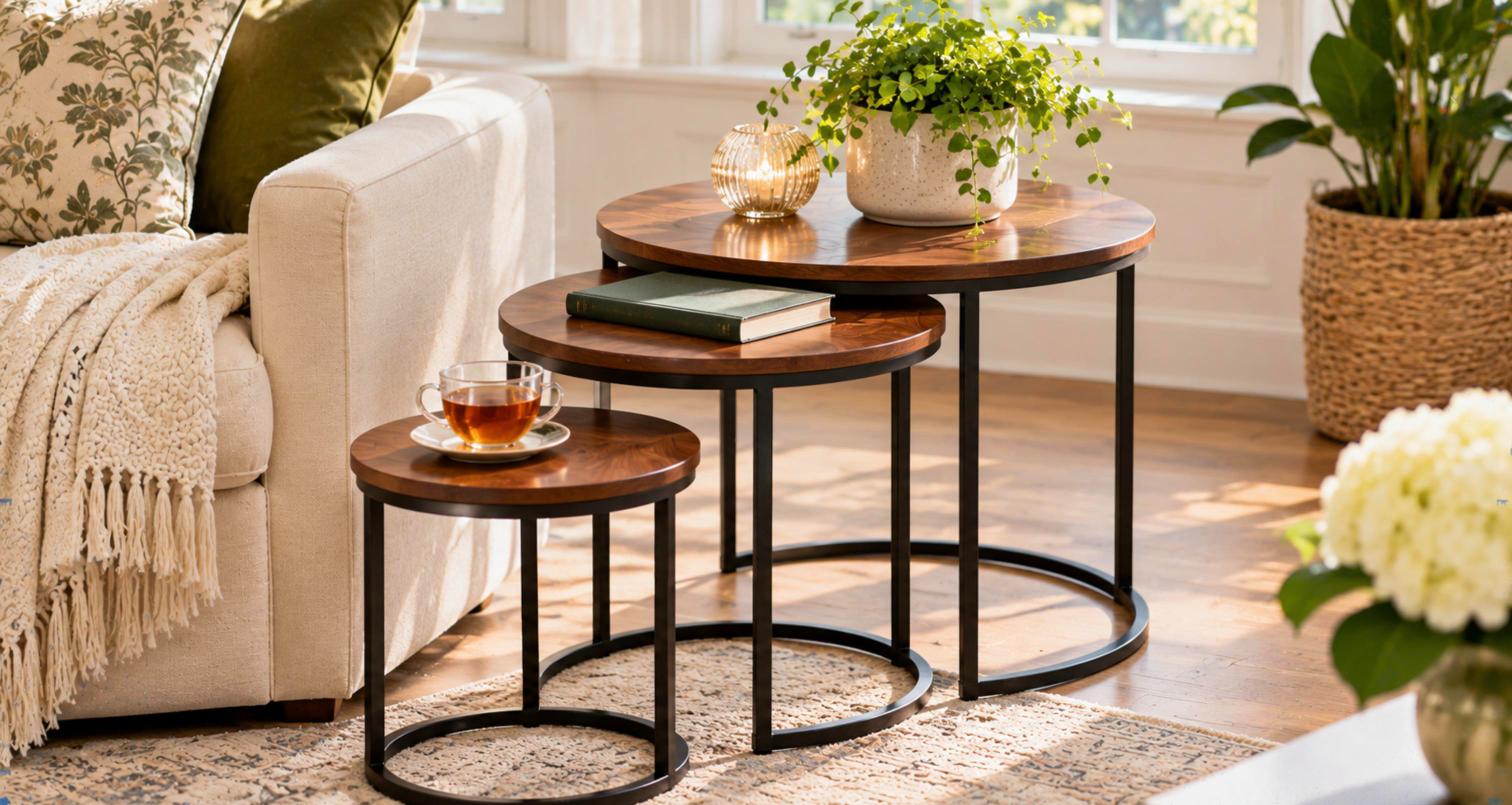
Each table in the set is slightly lower and narrower than the one above it, with legs positioned so it can slide beneath the larger table. Some sets nest from the front, others from the side, and round sets often nest with offset tops, as in the photo, creating an attractive layered look even when closed.
Ways to use nesting tables
- As a coffee table: two round nesting tables offset in front of a sofa create a sculptural coffee table that can separate for guests (see coffee table).
- As side tables: beside a sofa or armchair, with the smaller table pulled out for a drink.
- Bedside: a compact nightstand alternative.
- Entertaining: separate them around the room for snacks and drinks.
- Home office: one as a laptop perch beside a chair, another for a printer or plant.
Choosing a set
- Height: the largest table should suit its main use; coffee-table heights are about 16–18 inches, side tables about 20–24 inches.
- Shape: round sets soften rooms and suit walkways; square sets look tidy against walls.
- Stability: lighter tables can tip if leaned on; check that legs are well braced.
- Ease of moving: smaller tables should be light enough to lift with one hand.
Materials
Nesting tables come in solid wood, veneered wood, marble or stone tops on metal frames, glass, lacquer and rattan. Wood-and-metal combinations, as shown, are durable and suit modern and industrial rooms; marble tops add luxury but are heavier and can stain.
Pros and cons
Pros: flexible, space-saving, visually interesting, and ideal for renters who move often. Cons: smaller surfaces than a single coffee table, lower tables can be awkward to reach, and lightweight sets may feel less solid.
Styling tips
Put taller items, like a vase or lamp, on the highest table and keep the lower tables clearer so they remain functional. A tray or coaster on each top protects finishes. Mix materials, such as a marble top with a wood one, for a curated look.
Related terms
Frequently asked questions
What are nesting tables?
A set of graduated tables that slide under each other to save space and pull apart when needed.
Can nesting tables be used as a coffee table?
Yes. Two or three nesting tables make a flexible coffee table.
How many tables are in a nesting set?
Usually two or three, sometimes four.
Are nesting tables good for small spaces?
Yes, they provide multiple surfaces in the footprint of one table.
Part of the Vancouver Furniture glossary of furniture, design and mattress terms. Browse furniture stores across Metro Vancouver or our mattress store guide.