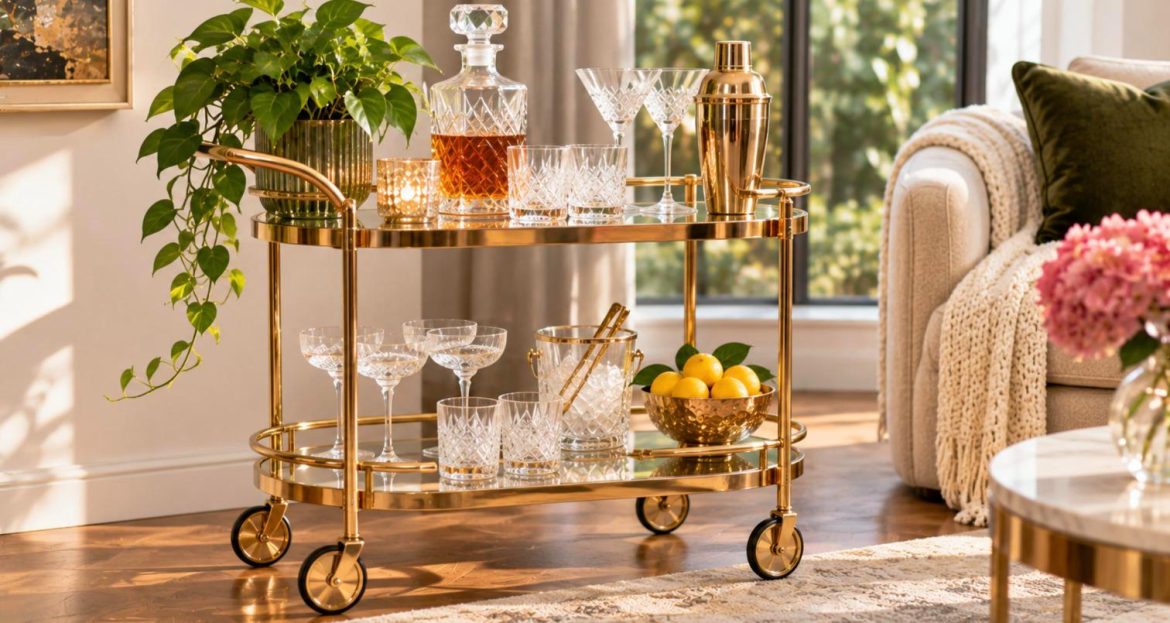
Bar Cart: Definition, History, Types & Styling Guide
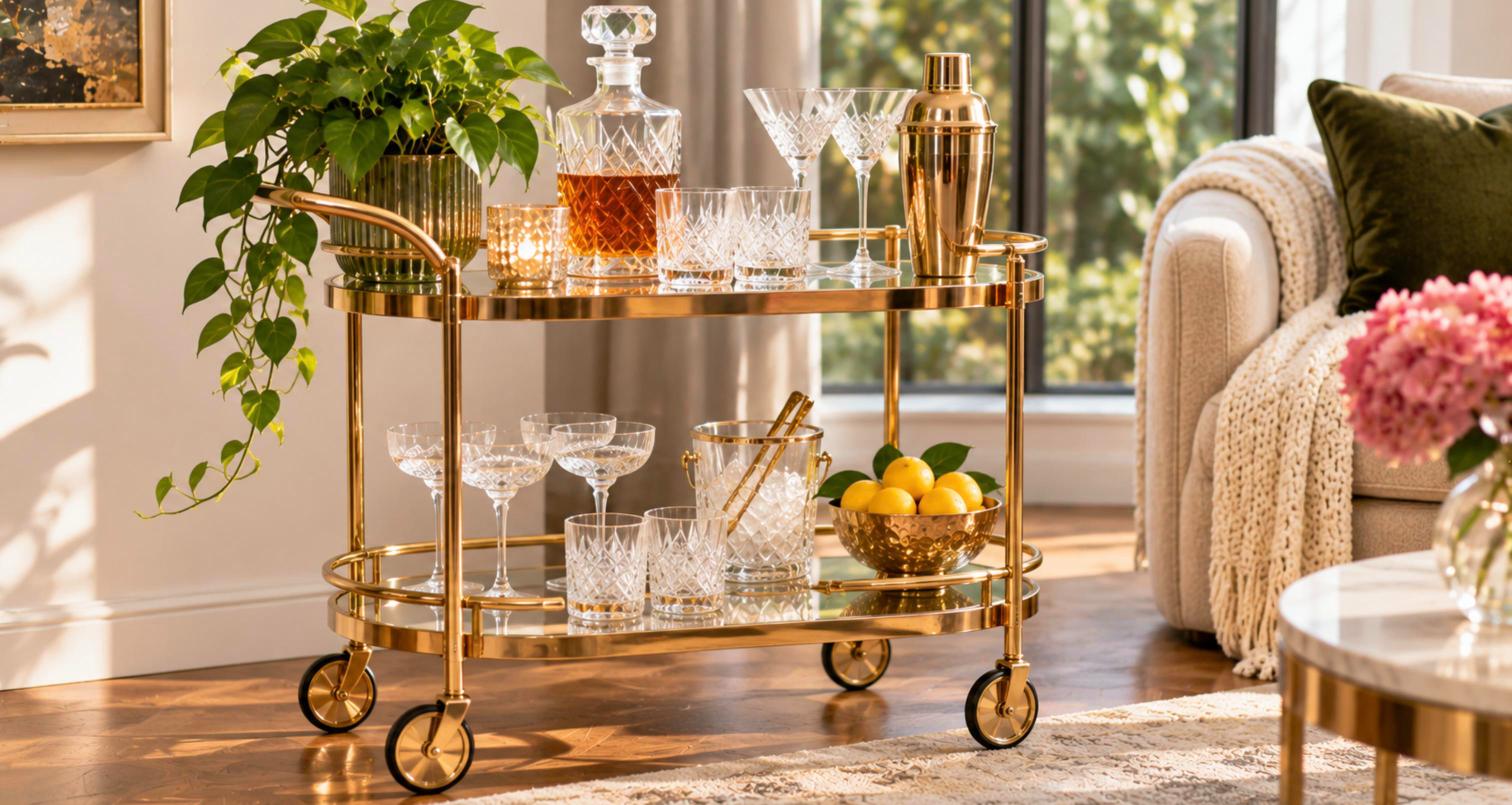
The bar cart is part furniture, part hospitality. It brings drinks to the party instead of sending guests to the kitchen, and when it is not in use, a well-styled cart is a small still life of glass, metal and colour. Its compact footprint makes it ideal for apartments and condos where a full bar cabinet or home bar would not fit, and it is easy to repurpose as a coffee station, plant stand or extra side table.
A brief history
Serving trolleys first became popular in grand homes and railway dining cars in the 19th century, and the tea cart was a fixture of early 20th-century households. The drinks trolley had its heyday in the mid-century cocktail culture of the 1950s and 1960s, when entertaining at home was fashionable and glamorous brass-and-glass carts appeared in living rooms everywhere. After decades out of fashion, the bar cart returned strongly in the 2010s as a compact, stylish solution for small-space living.
Types of bar cart
- Brass and glass: the classic glamorous look, often with an Art Deco or Hollywood Regency feel.
- Industrial: black metal and wood, sturdy and casual.
- Mid-century wood: teak or walnut trays with tapered legs and large wheels.
- Rattan or cane: light, textured and coastal.
- Folding or tray-top cart: removable trays for serving.
- Bar cart with storage: drawers, a wine rack or a stemware holder underneath.
- Outdoor cart: weather-resistant metal or teak for balconies and patios.
What to put on a bar cart
- Top shelf: a few spirits or a decanter, glasses for your favourite drinks, an ice bucket and a small decorative item such as a plant or flowers.
- Tools: shaker, jigger, strainer, bar spoon, muddler and bottle opener, ideally on a small tray.
- Lower shelf: extra bottles, mixers, napkins, coasters, cocktail books and a wine rack or basket.
- Garnishes: a bowl of lemons or limes adds colour.
Less is more: a cart crowded with bottles looks cluttered and is hard to move safely.
Styling tips
- Group items on trays to make them easy to clean and move.
- Vary heights with decanters, glasses and a plant.
- Repeat one metal finish, such as brass, across the cart.
- Add art or a mirror on the wall above to create a vignette.
- Light it with a small lamp or picture light (see accent lighting).
Beyond drinks
- Coffee and tea station in a kitchen or office.
- Plant stand by a sunny window.
- Bedside table in a small bedroom.
- Bathroom storage for towels and toiletries.
- Kids’ art cart that rolls out of sight.
- Serving cart for dinner parties.
Buying tips
Check that wheels lock or roll smoothly on your floors and are large enough to cross rugs; look for a raised rim or gallery around the shelves so bottles cannot slide off; confirm the weight capacity of each shelf; and choose tempered glass if the shelves are glass. Measure where it will live: a 75 to 85 cm height works well alongside most sofas and dining tables.
Bar carts in Vancouver condos
In compact condos, a bar cart provides entertaining space without dedicating a wall to a cabinet, and it can roll onto a balcony on summer evenings. If you have young children, keep bottles out of reach or choose a cart with a lockable cabinet below.
Related terms
Frequently asked questions
What is a bar cart used for?
Storing, displaying and serving drinks and glassware; it can also be used as a coffee station, plant stand or side table.
What should go on a bar cart?
A few bottles or a decanter, glasses, an ice bucket, bar tools, a tray and something decorative such as a plant or citrus.
Is a bar cart or bar cabinet better?
A bar cart is mobile, compact and decorative; a bar cabinet holds more and hides everything behind doors.
How tall should a bar cart be?
Most are 75 to 85 cm tall, similar to a table, which is comfortable for serving.
Part of the Vancouver Furniture glossary of furniture, design and mattress terms. Browse furniture stores across Metro Vancouver or our mattress store guide.