Bar Cabinet: Definition, Types, Features & Buying Guide
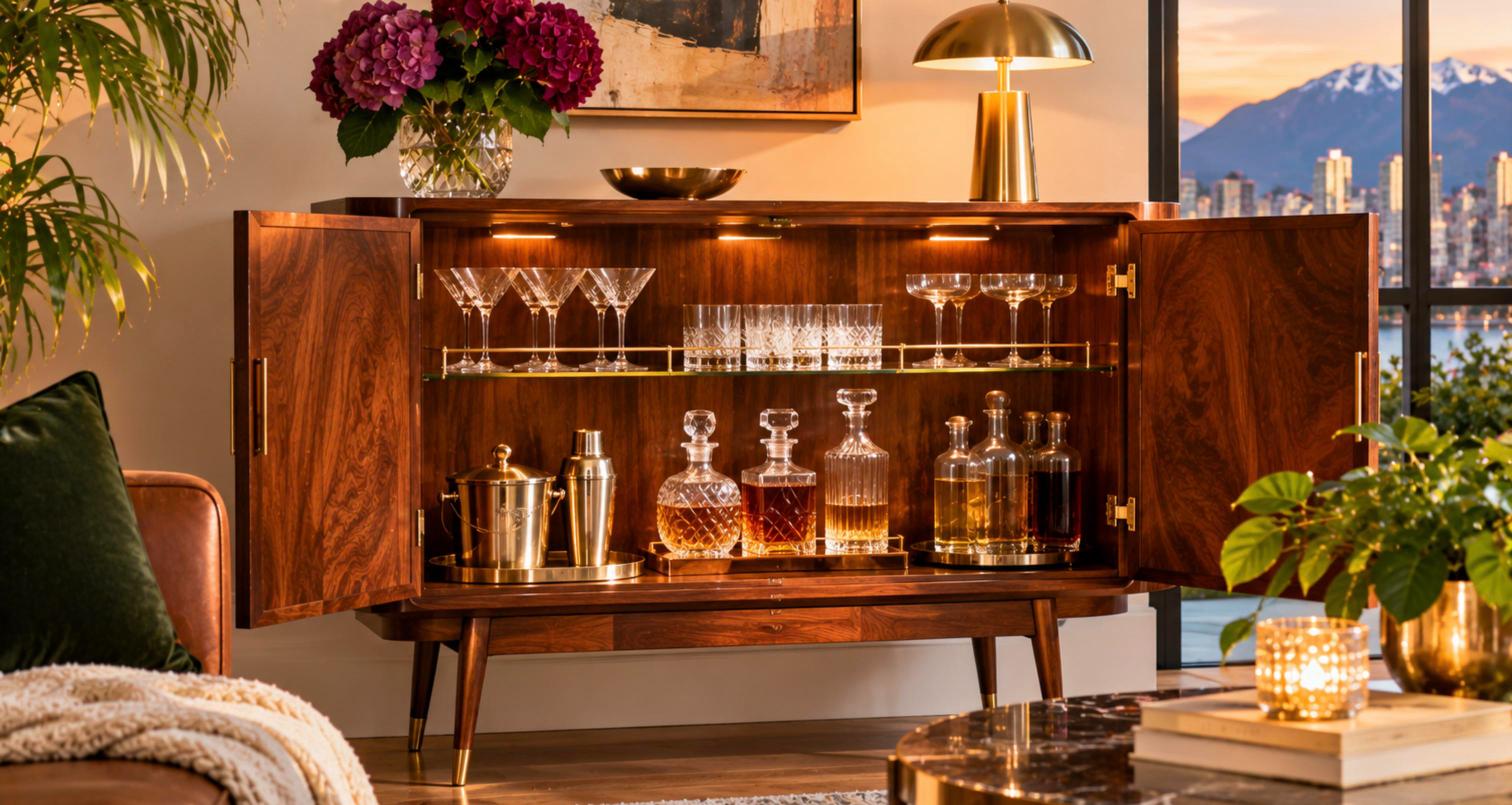
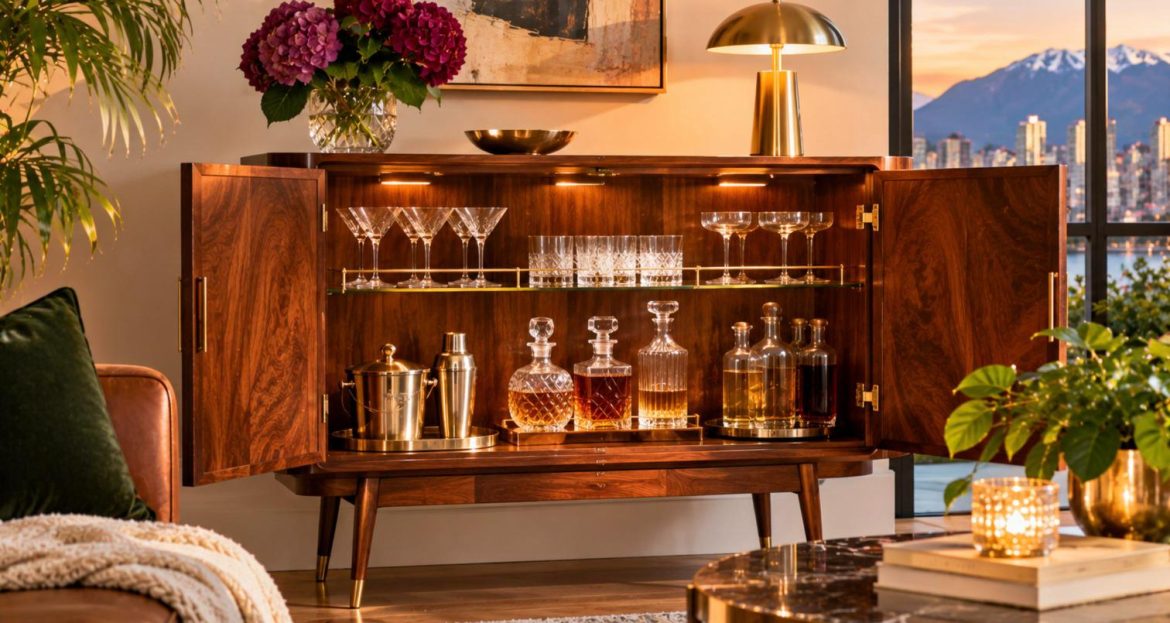
A bar cabinet turns entertaining into a piece of furniture. Instead of bottles crowding a kitchen counter, everything you need for a drink, from glasses and shakers to wine and spirits, lives in one place, hidden when the doors are closed and on display when they open. Bar cabinets range from compact mid-century credenzas to tall armoire-style units, and they are a popular way to add both storage and personality to a living or dining room.
Bar cabinet vs. bar cart vs. sideboard
- Bar cabinet: enclosed storage with doors, often with dedicated bottle and glass storage; neat and secure.
- Bar cart: an open, wheeled trolley for display and serving; mobile and decorative but holds less (see bar cart).
- Sideboard or credenza: a long, low cabinet for dining storage that can double as a bar.
- Home bar: a built-in counter, sometimes with a sink and fridge.
Types of bar cabinet
- Mid-century cocktail cabinet: low, wooden, on tapered legs, often with a drop-front or fold-out work surface.
- Tall bar armoire: an armoire-style cabinet with doors that open to reveal shelves, racks and stemware holders.
- Bar sideboard: a long credenza fitted with wine racks and bar drawers.
- Corner bar cabinet: uses a corner efficiently.
- Wall-mounted bar: a floating cabinet for small spaces.
- Wine cabinet: focused on bottle storage, sometimes climate-controlled.
Features to look for
- Bottle storage: racks that hold wine horizontally and space tall enough for spirit bottles, usually at least 33 cm.
- Stemware rack: slots that hang wine glasses upside down.
- Work surface: a pull-out shelf or durable top for mixing drinks.
- Drawers: for bar tools, napkins and coasters.
- Interior lighting: LED strips that make glassware glow (see accent lighting).
- Lock: useful in homes with children or teenagers.
- Durable finish: resistant to alcohol and water rings.
Choosing the right size
Measure the wall and check door swing. Count what you will store: a modest cabinet holds a dozen bottles and a set of glasses; dedicated collectors may need double units. For a cabinet used as a serving station, a work height of 90 to 100 cm is comfortable for standing. Check internal shelf heights against your tallest bottles before you buy.
Styling a bar cabinet
Keep the top for a lamp, a tray with a decanter and glasses, and something decorative such as flowers or art above. Inside, group bottles by type, keep everyday glasses at the front and display special glassware where interior lighting catches it. A mirror back panel doubles the sparkle.
Bar cabinets in Vancouver homes
In condos without a separate dining room, a slim bar cabinet can double as a sideboard, media unit or entryway console. In basements and rec rooms, a tall bar armoire creates a home bar without plumbing. Keep wooden cabinets away from heating vents, which can dry corks and crack veneer, and store wine on its side at a steady, cool temperature.
Care
Wipe spills immediately, since alcohol can dissolve some finishes; use coasters on the top and mats under bottles inside; and dust glass shelves regularly. Check hinges and door alignment occasionally, especially on heavy loaded doors.
Related terms
Frequently asked questions
What is the difference between a bar cabinet and a bar cart?
A bar cabinet has doors and enclosed storage; a bar cart is an open, wheeled trolley for display and serving.
What should be in a bar cabinet?
Bottles, glassware, a shaker, jigger, strainer, bar spoon, bottle opener, napkins and coasters.
How tall should a bar cabinet be?
Low cabinets are about 90 cm; tall armoire-style cabinets reach 180 cm or more. A serving height of 90–100 cm is comfortable.
Can a sideboard be used as a bar cabinet?
Yes. Many sideboards work well as bars, especially with added wine racks and a tray on top.
Part of the Vancouver Furniture glossary of furniture, design and mattress terms. Browse furniture stores across Metro Vancouver or our mattress store guide.