
Headboard Guide: Types, Heights, Sizes & How to Choose
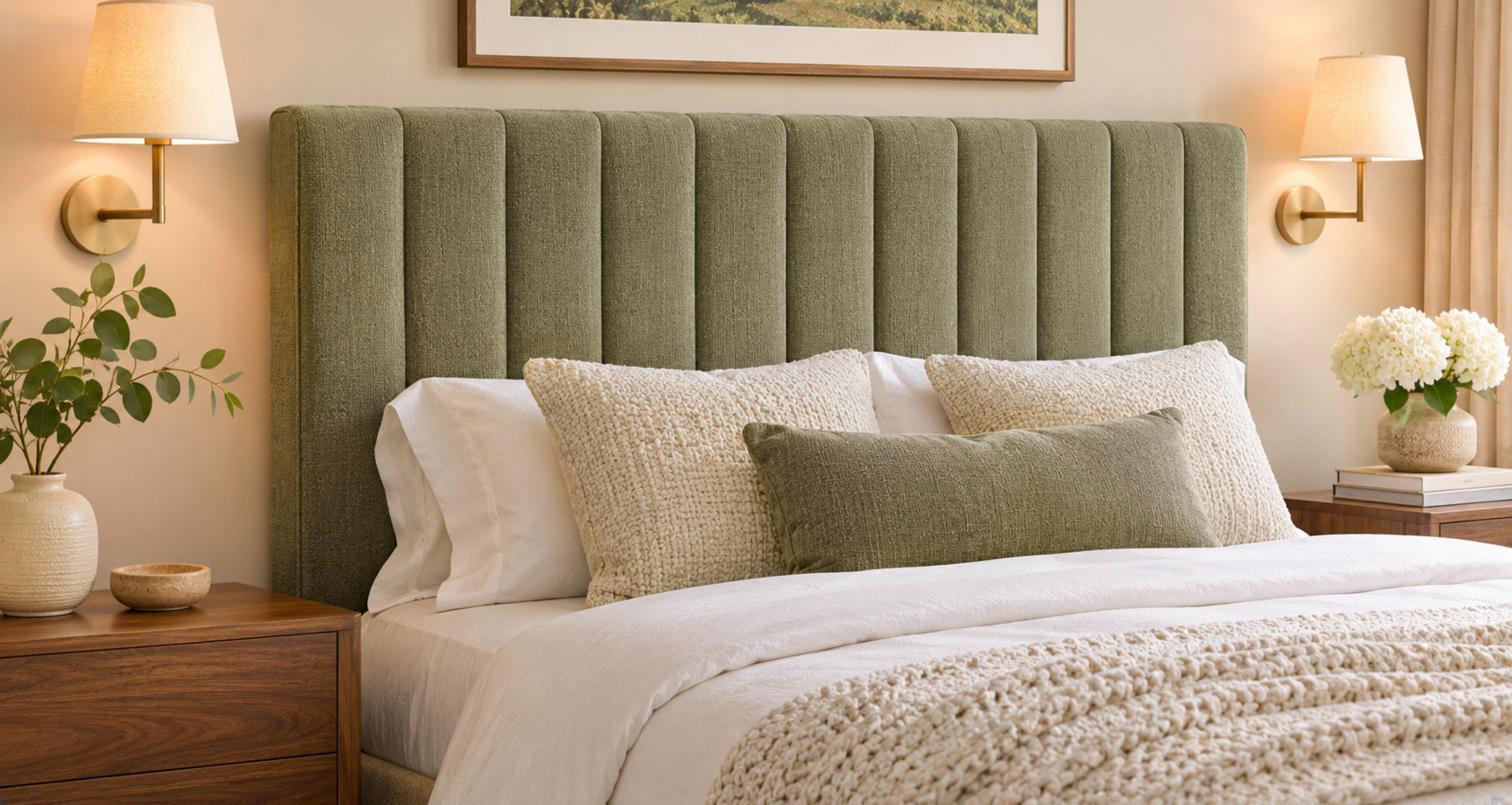
Headboards date back centuries, when they helped insulate sleepers from cold, draughty walls. Today they are mostly about comfort and design. A headboard can transform a plain bed into a statement piece, add softness to a minimal bedroom, or provide storage and lighting in a compact space. Choosing the right style, size and height makes a big difference to how the room looks and how comfortable the bed is for reading.
Types of headboards
- Upholstered: padded fabric or leather, often with tufting or channel stitching, as in the photo; comfortable to lean on.
- Wood: solid panels, slats or carved designs; durable and easy to clean.
- Metal: iron or brass, from ornate to minimal.
- Cane and rattan: airy, natural texture.
- Wingback: sides curve forward around the pillows.
- Bookcase / storage: shelves or cubbies built into the headboard.
- Wall-mounted or floating: attached to the wall rather than the frame.
How tall should a headboard be?
A useful rule is for the headboard to rise at least 10 to 12 inches (25–30 cm) above the top of the mattress, so it is visible above pillows. For reading in bed, 20 inches (51 cm) or more above the mattress is more comfortable. Tall statement headboards of 60 inches (152 cm) or more from the floor suit rooms with high ceilings. Consider window placement and wall sconces when choosing height.
Sizing
A headboard should be at least as wide as the mattress and usually 1 to 4 inches wider on each side to cover the frame. Standard widths: twin about 39–41 in, full about 54–56 in, queen about 60–62 in, king about 76–80 in. Check that mounting brackets match your frame.
Attaching a headboard
- Check if your bed frame has headboard brackets or pre-drilled holes.
- Use adapter brackets if holes do not line up.
- Wall-mount if the frame lacks brackets, using a French cleat or anchors into studs.
- Add felt pads to prevent the headboard knocking against the wall.
Choosing a headboard
Consider how you use the bed: readers benefit from padded upholstery; allergy sufferers may prefer wood or metal, which are easier to wipe clean. Use performance fabrics if pets share the bed. In small Vancouver bedrooms, slim wall-mounted headboards or ones with built-in shelves can replace nightstands.
Related terms
Frequently asked questions
What is a headboard?
The panel at the head of a bed that acts as a backrest, protects the wall and anchors the room’s design.
How high should a headboard be above the mattress?
At least 10 to 12 inches, and 20 inches or more if you read in bed.
Can you attach a headboard to any bed frame?
Most frames have brackets or holes; otherwise use adapter brackets or wall-mount the headboard.
Should a headboard be wider than the bed?
Usually slightly wider, by 1 to 4 inches on each side.
Part of the Vancouver Furniture glossary of furniture, design and mattress terms. Browse furniture stores across Metro Vancouver or our mattress store guide.