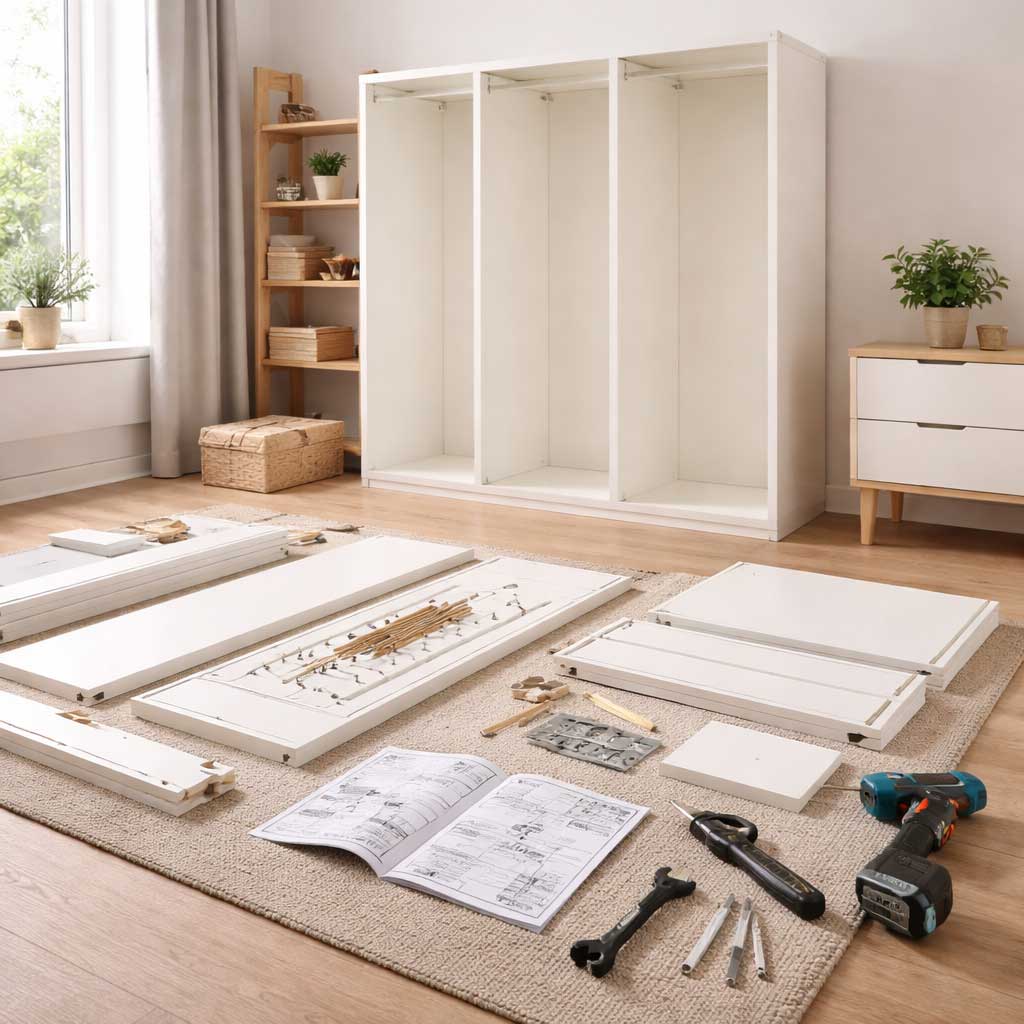
Assembly furniture, commonly known as flat-pack furniture, refers to furniture that is manufactured in components and packaged in flat boxes for transportation, requiring assembly by the end user. The pieces are designed to be easily transported, stored, and assembled using basic tools or included hardware.
Flat-pack furniture is widely used in modern homes due to its affordability, convenience, and space-efficient packaging. It is commonly associated with ready-to-assemble (RTA) furniture and is popular in residential, rental, and temporary living environments.
Definition
In furniture design and manufacturing, assembly furniture (flat-pack) refers to furniture sold in disassembled parts that must be assembled by the user.
It typically includes:
- pre-cut panels or components
- hardware such as screws, bolts, and connectors
- assembly instructions
Flat-pack furniture is designed for easy shipping and user-friendly assembly.
Etymology
The term “flat-pack” refers to the packaging method in which furniture components are packed flat to reduce volume and improve transportation efficiency.
The term “assembly furniture” describes the requirement for the user to assemble the product after purchase.
These terms became widely used with the rise of mass-produced, ready-to-assemble furniture in the late 20th century.
Design Characteristics
Assembly furniture is defined by its modular structure and ease of transport.
Modular Components
Flat-pack furniture consists of separate parts that are designed to fit together through connectors or fasteners.
Compact Packaging
The furniture is packaged in flat boxes, making it easier to:
- transport
- store
- handle
User Assembly
Assembly is typically required and may involve:
- basic tools such as screwdrivers or hex keys
- step-by-step instructions
- standardized hardware
Standardized Design
Flat-pack furniture is often designed using standardized components to simplify production and assembly.
Materials and Construction
Assembly furniture is typically made from materials that balance cost, durability, and weight.
Common materials include:
- engineered wood (such as particleboard or MDF)
- laminate or veneer finishes
- metal hardware and connectors
These materials allow for efficient manufacturing and affordability.
Advantages
Flat-pack furniture offers several practical benefits:
- cost efficiency – generally more affordable than fully assembled furniture
- ease of transportation – compact packaging reduces shipping costs
- space-saving storage – easier to store before assembly
- accessibility – widely available and easy to purchase
Limitations
Despite its advantages, flat-pack furniture may have some limitations:
- requires time and effort to assemble
- may have lower durability compared to solid wood furniture
- assembly quality can affect stability
- limited customization options
Use in Modern Homes
Assembly furniture is commonly used in modern living environments, particularly where flexibility and affordability are important.
It is frequently used in:
- apartments and condos
- student housing
- rental properties
- home offices
Flat-pack furniture supports modern lifestyles by offering practical and accessible furnishing solutions.
Related Terms
Several terms are closely related to assembly furniture:
- ready-to-assemble (RTA) furniture
- modular furniture
- knock-down furniture
- mass-produced furniture
- engineered wood furniture
See Also: Furniture Glossary
Modular Furniture
Engineered Wood
Furniture Assembly
Storage Furniture
Contemporary Furniture