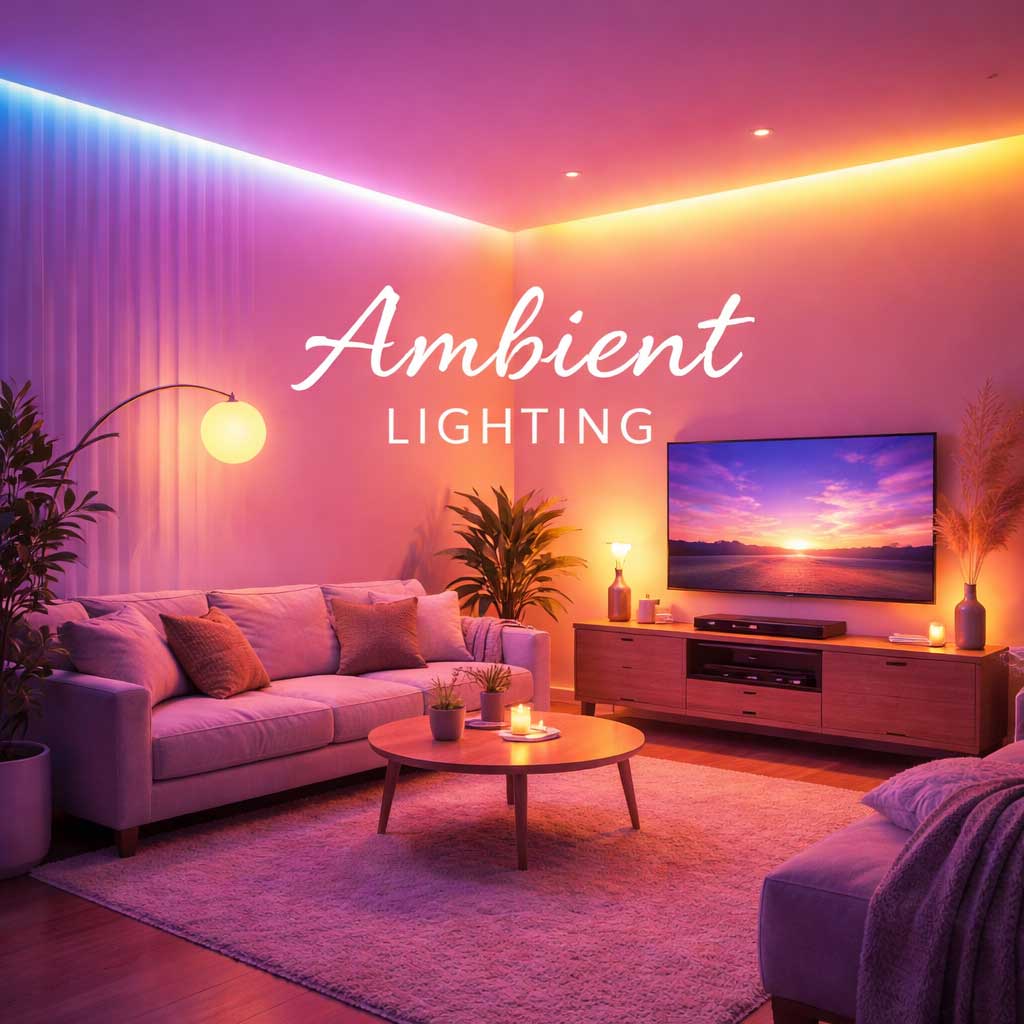
Ambient lighting is the primary source of illumination in an interior space, providing overall, uniform lighting that allows people to move comfortably and perform general activities. It forms the foundation of a lighting design scheme and ensures that a room is adequately lit without harsh shadows or excessive contrast.
Ambient lighting is commonly achieved through ceiling fixtures, recessed lights, wall-mounted fixtures, or natural light sources. It is an essential component of interior design and is typically combined with task lighting and accent lighting to create a balanced and functional lighting environment.
Definition
In interior design, ambient lighting refers to general illumination that evenly lights a space and provides overall visibility.
Ambient lighting is typically:
- diffused and uniform
- designed to reduce shadows and glare
- used as the main light source in a room
- combined with other lighting types for layered lighting
It serves as the base layer of lighting in most interior environments.
Etymology
The term “ambient” originates from the Latin word ambiens, meaning “surrounding” or “encompassing.” In lighting, it refers to illumination that fills and surrounds a space rather than focusing on specific objects.
The term reflects the role of ambient lighting as the general, background light within an interior.
Sources of Ambient Lighting
Ambient lighting can be created using a variety of lighting fixtures and natural sources.
Ceiling Fixtures
Common ceiling-based lighting includes:
- flush-mount lights
- semi-flush mount fixtures
- chandeliers
These fixtures distribute light evenly across a room.
Recessed Lighting
Recessed lights are installed into ceilings and provide clean, unobtrusive illumination that spreads evenly throughout a space.
Wall-Mounted Lighting
Wall sconces can contribute to ambient lighting by reflecting light across walls and ceilings.
Natural Light
Daylight from windows, skylights, and glass doors is an important source of ambient lighting during daytime hours.
Design Characteristics
Ambient lighting is defined by its ability to provide consistent and comfortable illumination.
Even Distribution
Ambient lighting is designed to spread light evenly throughout a space, minimizing dark areas and strong shadows.
Soft Illumination
The light is typically diffused to avoid glare and create a comfortable visual environment.
Foundation of Layered Lighting
Ambient lighting is one of the three main layers of lighting, alongside:
- task lighting
- accent lighting
Together, these layers create a balanced and functional lighting design.
Functional and Supportive
While not focused on specific tasks, ambient lighting supports everyday activities by providing sufficient overall visibility.
Ambient Lighting in Interior Design
Ambient lighting plays a critical role in interior design by establishing the overall brightness and atmosphere of a space. It is used to:
- ensure safe and comfortable visibility
- define the general mood of a room
- support other lighting layers
- enhance architectural features indirectly
In modern interiors, ambient lighting is often designed to be subtle and integrated into the overall aesthetic.
Common Applications
Ambient lighting is used in all types of interior spaces, including:
- living rooms
- bedrooms
- kitchens
- offices
- commercial environments
It is essential in any space where general visibility is required.
Related Terms
Ambient lighting is closely related to other lighting types and design concepts.
These include:
- task lighting
- accent lighting
- layered lighting
- general lighting
- recessed lighting
See Also: Furniture Glossary
Accent Lighting
Task Lighting
Interior Lighting
Recessed Lighting
Pendant Lighting