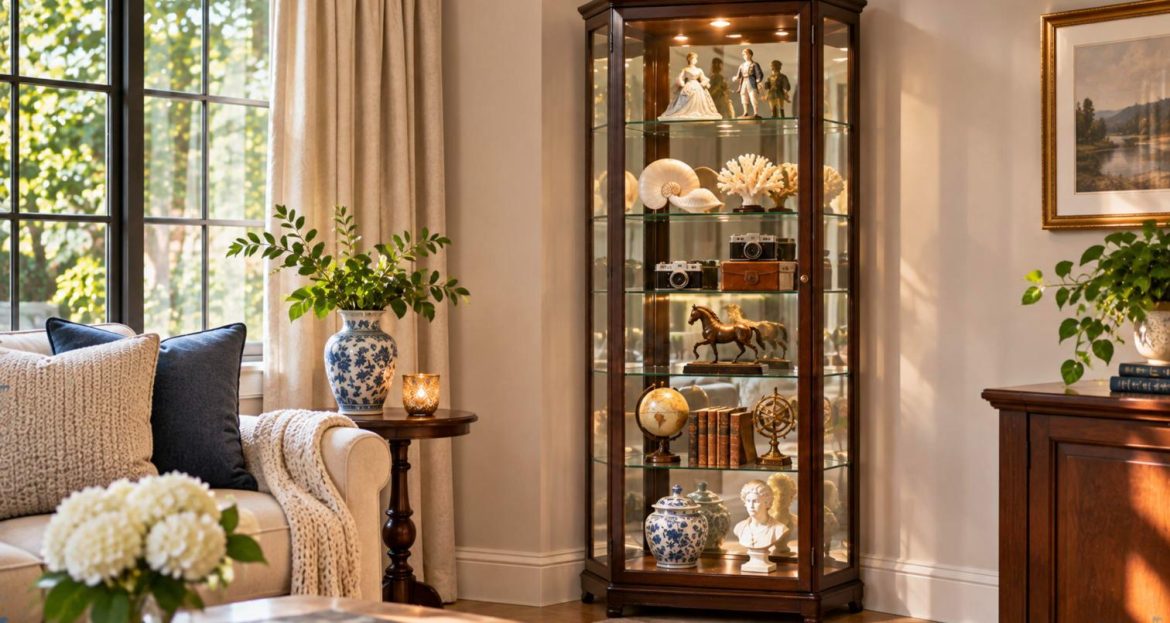
Curio Cabinet: Definition, Types, Lighting & How to Display Collections
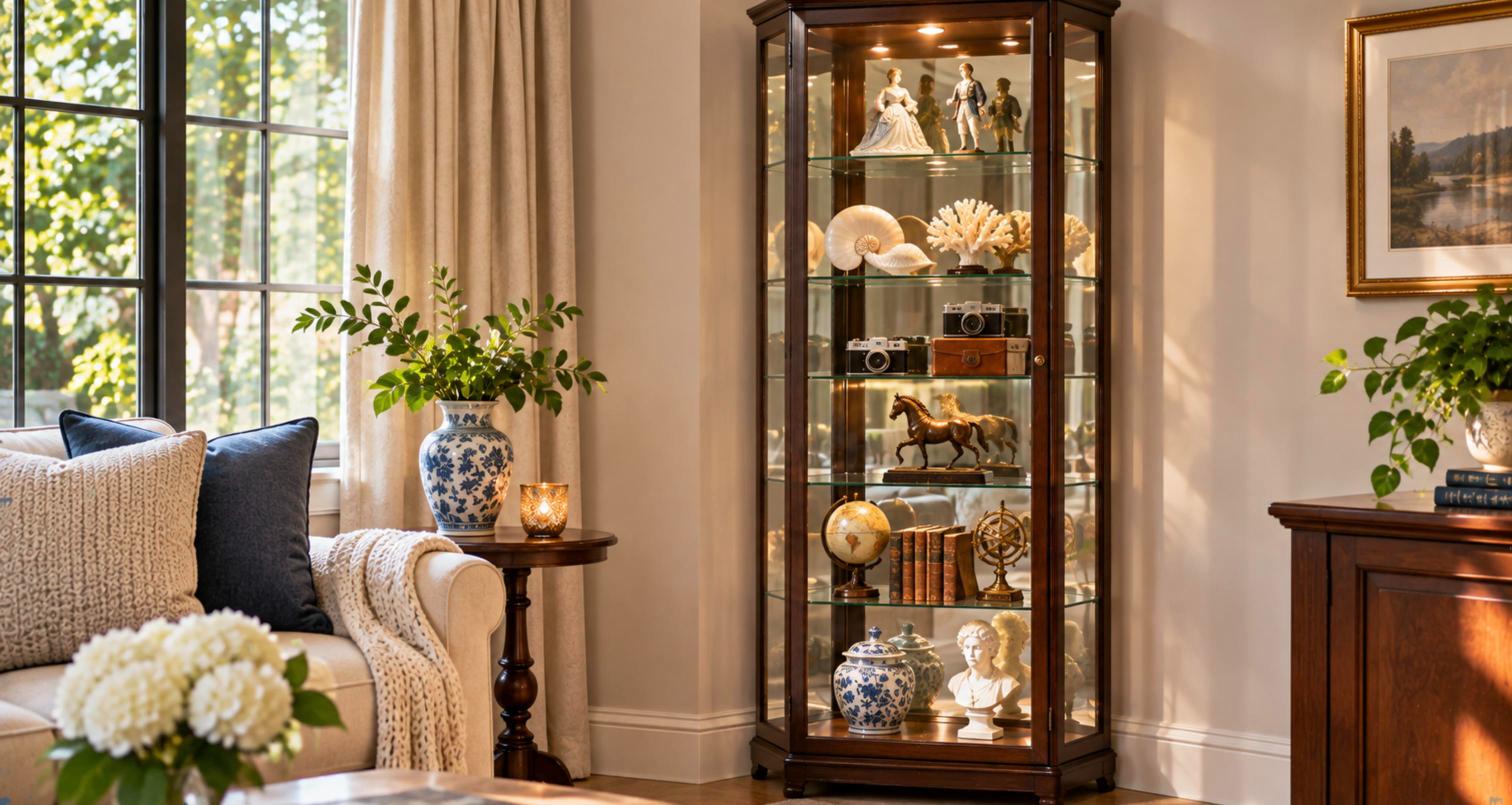
The curio cabinet descends from the Renaissance “cabinet of curiosities” (Wunderkammer), rooms and cupboards where collectors displayed natural specimens, art, scientific instruments and exotic objects. As collecting became a middle-class hobby in the 19th century, compact glass display cabinets brought the idea into ordinary parlours. “Curio” is short for curiosity: an unusual or interesting object.
Modern curio cabinets range from traditional wood-framed cases with mirrored backs and lighting, like the one in the photo, to minimalist glass-and-metal vitrines. They are a good solution for anyone with a collection that deserves to be seen but needs protecting from dust, pets and small hands.
Curio cabinet vs. china cabinet
A china cabinet is usually wider and deeper, built for plates, serving dishes and glassware, with closed storage below. A curio cabinet is slimmer, more fully glazed and designed for smaller objects, often with glass on three or all four sides so items can be seen from different angles. An étagère is an open shelving unit with no doors.
Types of curio cabinets
- Floor-standing: tall, freestanding vitrines; the classic form.
- Corner curio: triangular or quarter-round to use corners efficiently.
- Wall-mounted: shallow cases that hang on the wall, good for small spaces.
- Console or tabletop curio: low display cases at table height.
- Lighted curio: interior LED or halogen lights, often with touch switches.
- Modern vitrine: glass and metal with minimal framing.
Lighting and mirrors
Interior lighting makes collectibles glow, especially glass, crystal and porcelain. Glass shelves let light reach every level, while a mirrored back reflects light and shows the reverse of objects. Use LED lighting, which runs cool and will not heat delicate items or old finishes.
Arranging a collection
- Group items by theme, colour or material.
- Place taller, heavier items on lower shelves for stability.
- Use small risers and stands to vary heights.
- Leave space around special pieces so they stand out.
- Rotate items seasonally to keep the display fresh.
Earthquake and safety tips
In earthquake-prone British Columbia, always anchor curio cabinets to wall studs. Use museum putty or gel under fragile objects, keep doors latched, and avoid placing cabinets where they could block an exit if they fell. Tempered glass shelves are safer than ordinary glass.
Where to place a curio cabinet
Good spots include a living room corner, a hallway, a dining room or a home office. Avoid direct sunlight, which can fade colours and heat the interior, and keep away from heating vents. In small condos, a slim corner or wall-mounted curio displays a collection without using much floor space.
Buying tips
- Check for tempered glass and sturdy shelf supports.
- Look for adjustable shelves to fit different object heights.
- Ensure doors close securely; locking doors protect valuables.
- Choose a wood or metal finish that suits your other furniture.
Related terms
Frequently asked questions
What is a curio cabinet?
A glass display cabinet for collectibles and small treasures.
What is the difference between a curio cabinet and a china cabinet?
A curio cabinet is slimmer and more fully glazed for small objects; a china cabinet is larger and built for dishes, with closed storage below.
Why is it called a curio cabinet?
“Curio” is short for curiosity, from the Renaissance tradition of cabinets of curiosities.
Should a curio cabinet be anchored?
Yes, especially in earthquake-prone areas like BC.
Part of the Vancouver Furniture glossary of furniture, design and mattress terms. Browse furniture stores across Metro Vancouver or our mattress store guide.