
Murphy Bed (Wall Bed): How It Works, Types, Costs & Buying Guide
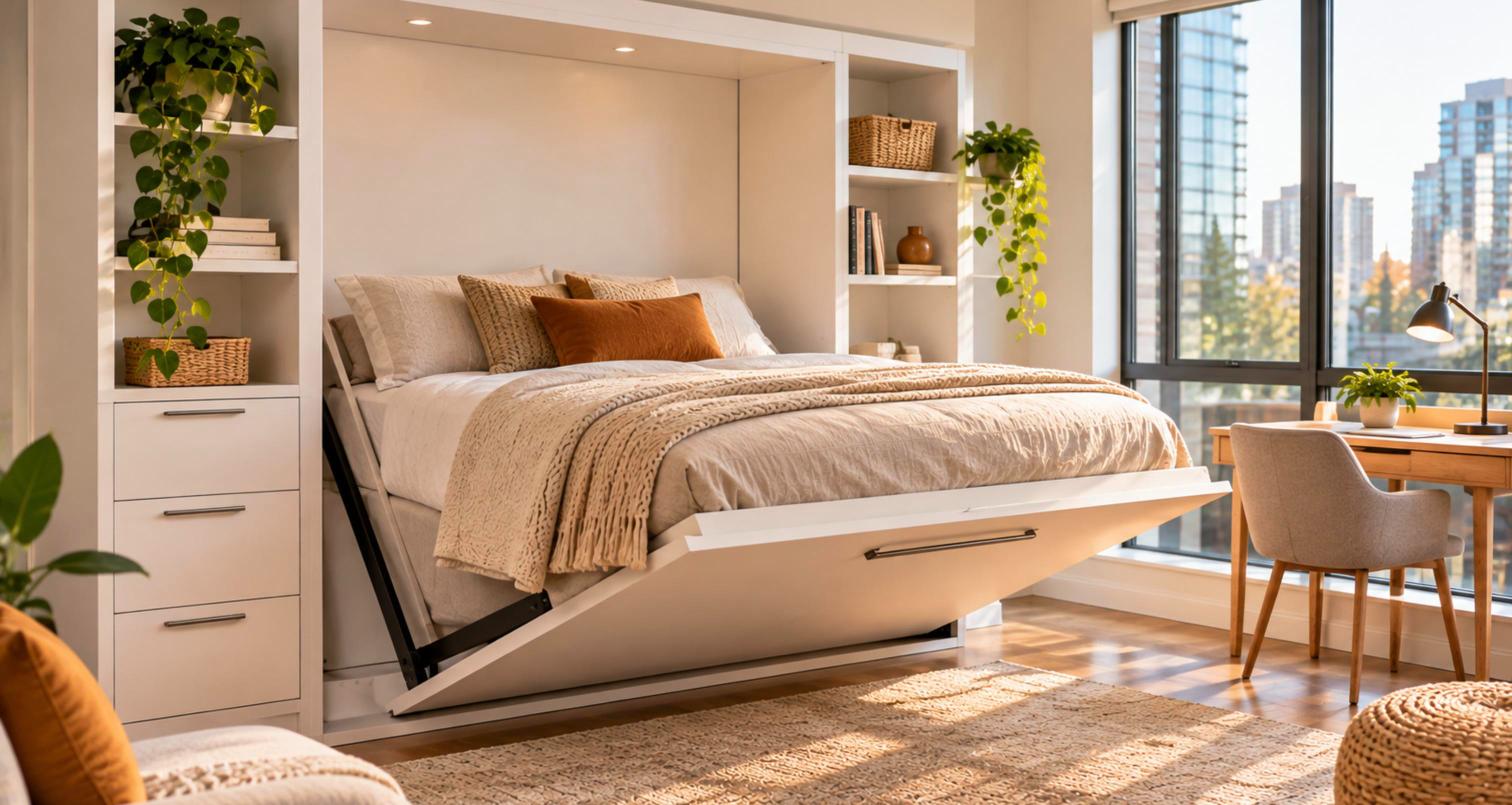
The Murphy bed is named after William Lawrence Murphy, who patented a folding “in-a-door” bed in the United States in the early 20th century, reportedly so he could entertain guests in his one-room San Francisco apartment. Early models folded into closets; modern wall beds are self-contained cabinets with counterbalance mechanisms that make lifting a full mattress almost effortless. Unlike a sofa bed, a Murphy bed uses a real mattress on a real frame, which makes it one of the most comfortable space-saving beds available, and a favourite for Vancouver condos, home offices and guest rooms.
How a Murphy bed works
The bed frame is hinged at the bottom of a wall-mounted cabinet. A counterbalance mechanism, either gas pistons or heavy springs, offsets the weight of the frame and mattress so the bed lowers and lifts smoothly with light pressure. Fold-out legs support the foot of the bed when it is down, and straps keep bedding in place when it is folded away. The cabinet must be securely anchored to the wall or floor.
Vertical vs. horizontal
- Vertical: the head of the bed is against the wall and it folds up lengthwise. Needs ceiling height of about 7 feet (213 cm) or more for a queen but projects further into the room when open.
- Horizontal (side-tilt): the long side is against the wall. Suits low ceilings, under windows and kids’ rooms, and takes up less depth when open.
Piston vs. spring mechanisms
Piston systems are quieter, smoother and easier to install but are typically set for a specific mattress weight. Spring systems are durable and adjustable for different mattress weights, but can be noisier and require careful tension setting. Both work well when professionally installed.
Combination units
- Murphy bed with desk: a desk on the front stays level as the bed folds down, so you need not clear it, ideal for home offices.
- Murphy bed with sofa: a sofa sits in front when the bed is up and the bed lowers over it.
- With side storage: shelving, wardrobes and drawers flanking the bed, as in the photo.
- Bunk wall beds: two fold-down beds for kids or guests.
Choosing a Murphy bed
- Measure ceiling height, wall width and open depth (a vertical queen can project about 85–90 inches / 216–229 cm into the room).
- Check for baseboard heaters, outlets and windows.
- Choose a mattress within the weight and thickness the mechanism allows, often 10–12 inches (25–30 cm).
- Decide whether you need a desk, sofa or storage combination.
- Use professional installation and secure anchoring for safety.
Murphy bed vs. sofa bed vs. daybed
A Murphy bed offers full mattress comfort and sleeps two in a queen, but it is a larger investment and usually permanently installed. A sofa bed is cheaper and movable but less comfortable. A daybed is a twin bed styled as a sofa. For frequent guests or nightly use in a small space, a Murphy bed is usually the best choice.
Related terms
Frequently asked questions
What is a Murphy bed?
A bed hinged at one end that folds up into a wall cabinet when not in use.
Are Murphy beds comfortable?
Yes. They use a regular mattress on a real frame, so they are more comfortable than most sofa beds.
Do Murphy beds need to be attached to the wall?
Yes. Most must be anchored to the wall or floor for safety.
What mattress can I use on a Murphy bed?
A standard mattress within the manufacturer’s weight and thickness limits, typically 10–12 inches.
Can you put a desk on a Murphy bed?
Yes, many units include a fold-down desk that stays level when the bed opens.
Part of the Vancouver Furniture glossary of furniture, design and mattress terms. Browse furniture stores across Metro Vancouver or our mattress store guide.