Daybed: Definition, Types, Sizes & Daybed vs. Sofa Bed
Daybeds have a long history: ancient Egyptians, Greeks and Romans used couches for reclining and dining, and 17th and 18th-century European homes had elegant “day beds” for resting during the day. The modern daybed is a practical piece for small spaces. Because it uses a regular twin mattress rather than a thin fold-out one, it is often more comfortable for sleeping than a pull-out sofa, and many models add a trundle that rolls out to sleep a second guest.
Types of daybeds
- Classic three-sided daybed: back and two sides, in wood or metal.
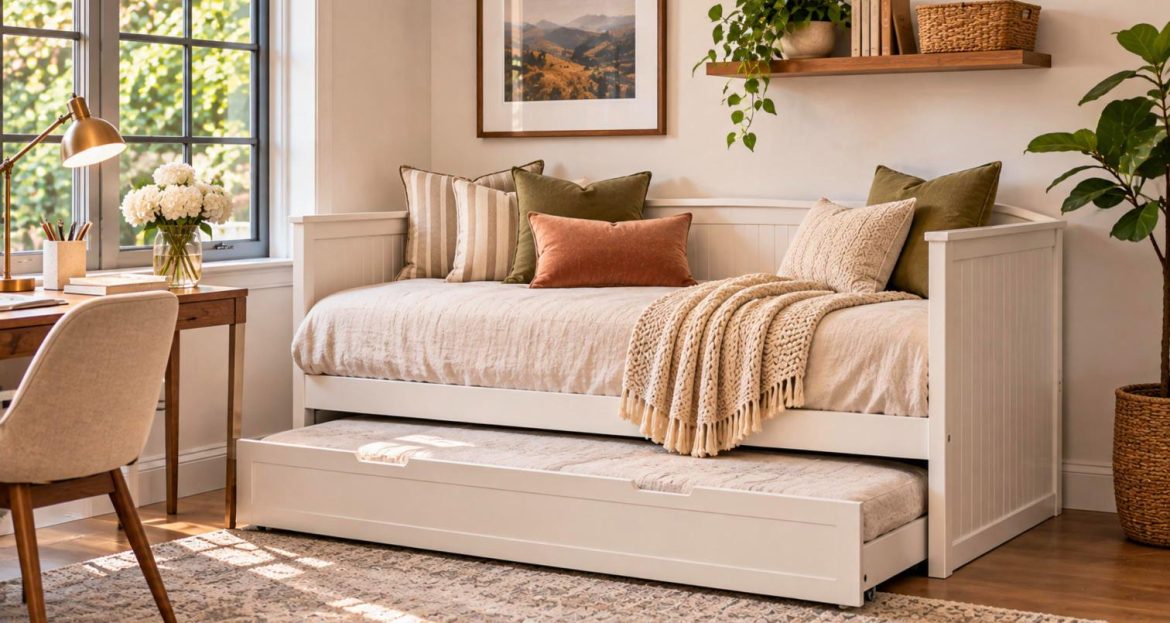
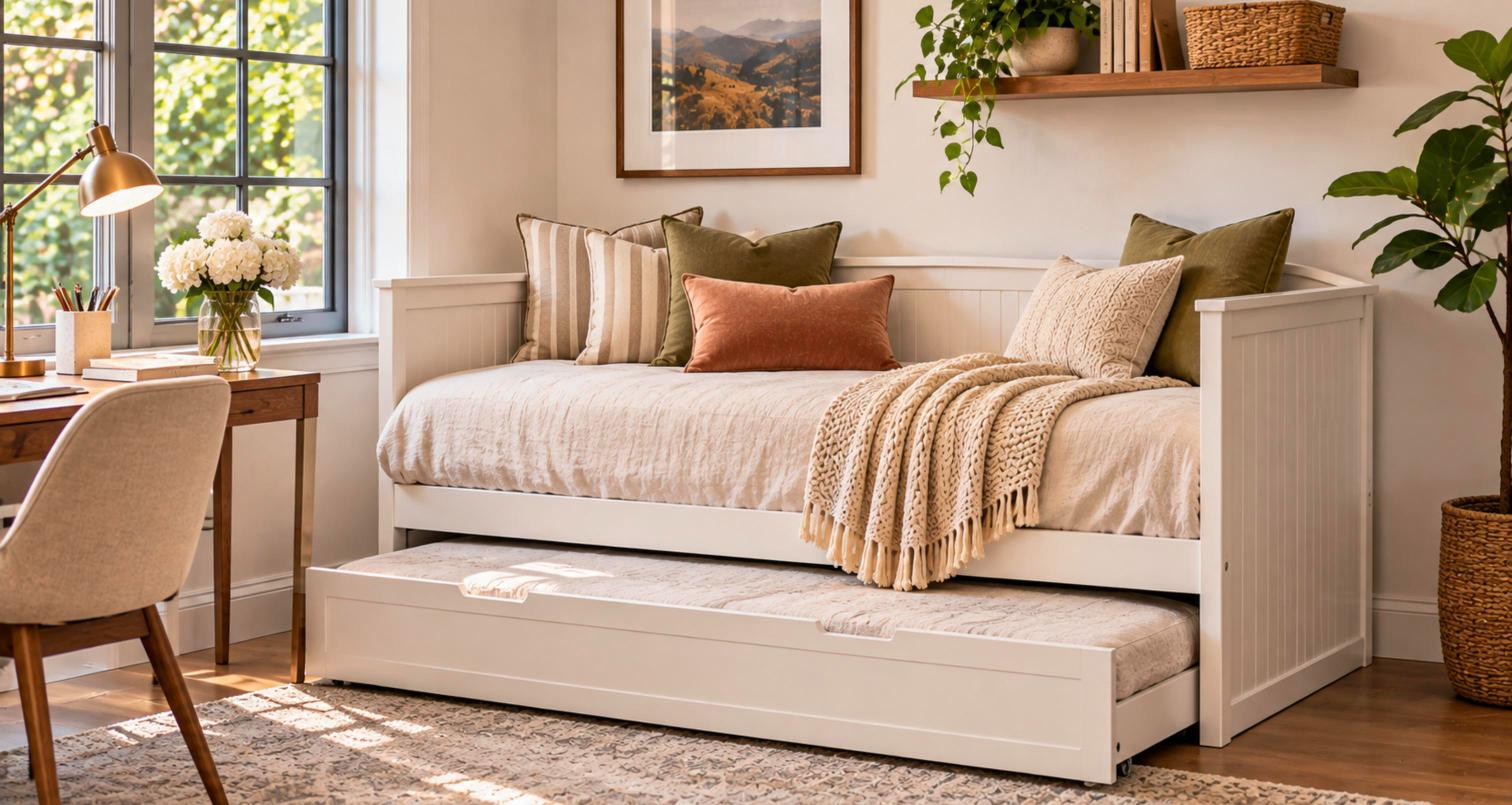
- Trundle daybed: a second twin mattress rolls out on a low frame underneath, as in the photo.
- Storage daybed: drawers in place of a trundle.
- Upholstered daybed: padded back and sides for a sofa-like look.
- Backless (Hollywood) daybed: a long upholstered bench-style bed, often with bolsters.
- Outdoor daybed: a weatherproof lounging bed, often with a canopy.
Daybed vs. sofa bed vs. futon
A sofa bed is a sofa first; its mattress folds away inside, and it can sleep two on full or queen sizes. A daybed is a bed first, with a regular twin mattress, so sleeping comfort is usually better but it sleeps one (two with a trundle). A futon folds a padded mattress between sitting and lying positions and is usually the cheapest option. A chaise longue is for lounging only.
Making a daybed work as a sofa
- Use large Euro or king pillows against the back for support.
- Add a few smaller cushions and bolsters at the ends.
- Choose a fitted cover or tailored bedspread rather than loose bedding.
- Consider a slightly firmer mattress so it sits well.
- Place a side table or ottoman nearby so it reads as a seating area.
Mattress and bedding
Most daybeds take a standard twin mattress around 38 × 75 inches (97 × 191 cm). Keep it to roughly 6 to 8 inches (15–20 cm) thick so it sits comfortably below the frame rails; a very thick mattress makes the seat too high. Trundle mattresses are usually thinner, 5 to 6 inches (13–15 cm), to fit underneath.
Where to use a daybed
- Home office / guest room: workspace by day, guest bed at night.
- Kids’ rooms: sleepovers made easy with a trundle.
- Sunroom or reading room: a lounging spot by the window.
- Studio apartments: a sofa that is also a bed.
- Covered patio: outdoor daybeds for summer lounging.
Daybeds for Vancouver homes
With so many Metro Vancouver households using a second bedroom as an office, a daybed is one of the best ways to keep a guest bed without losing the workspace. A trundle model lets visiting family sleep two in one small room. Choose a frame with storage drawers if closet space is tight.
Related terms
Frequently asked questions
What is a daybed?
A twin-size bed framed on three sides so it can be used as a sofa during the day and a bed at night.
What size mattress does a daybed take?
Most take a standard twin mattress, about 38 × 75 inches.
Is a daybed better than a sofa bed?
For sleeping, often yes, because it uses a regular mattress; a sofa bed is better as everyday seating and can sleep two.
Can two people sleep on a daybed?
On the main bed, usually only one; a trundle adds a second sleeping space.
How thick should a daybed mattress be?
About 6 to 8 inches, so the seat height stays comfortable.
Part of the Vancouver Furniture glossary of furniture, design and mattress terms. Browse furniture stores across Metro Vancouver or our mattress store guide.